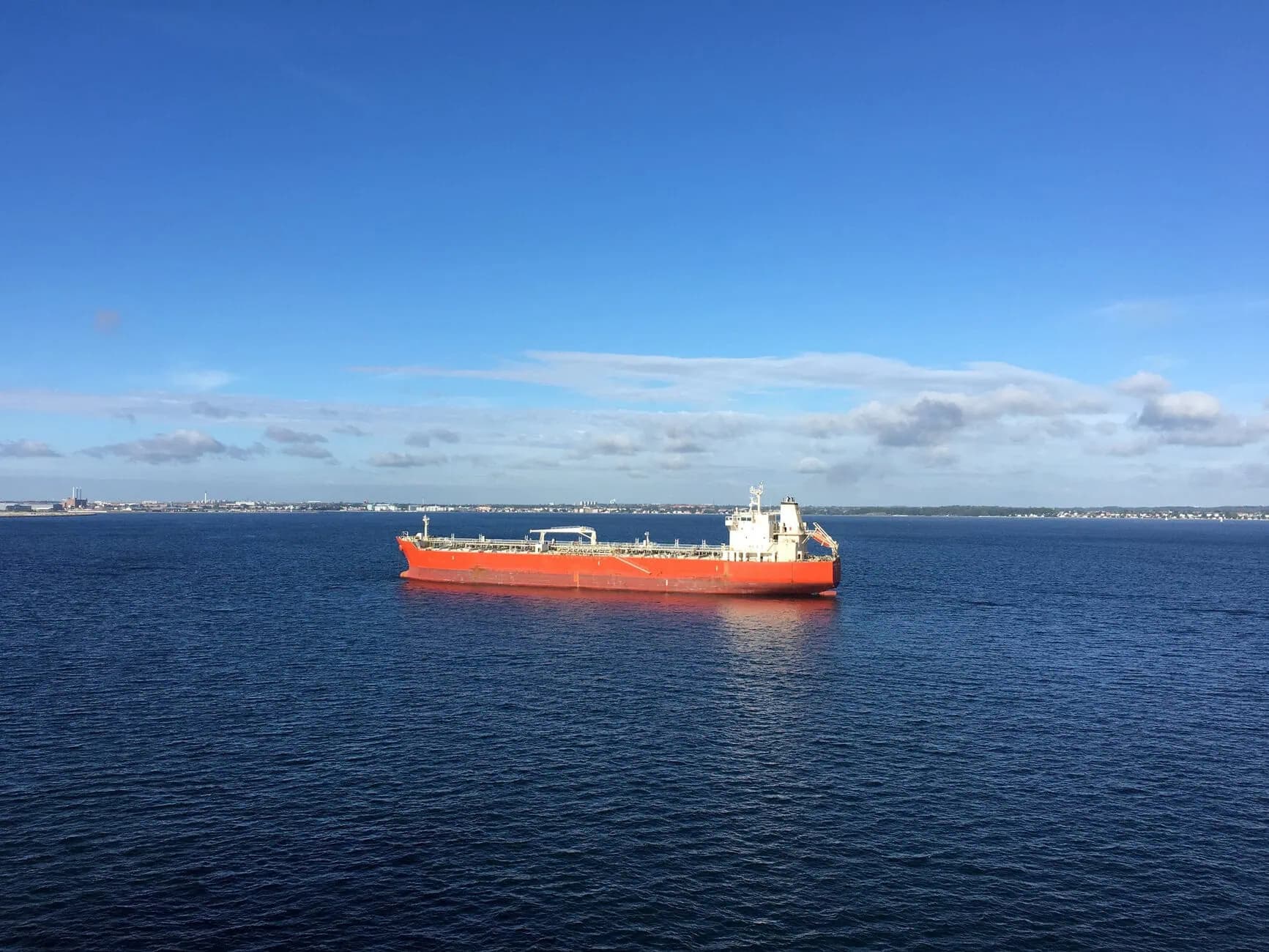
Ship-to-ship transfer between two vessels is one of the facts that make it difficult to determine the traceability of the product and raises the possibility that the cargo, as it appears in the documentation for one of them, has a Russian origin.
Specifically, one of the vessels that has raised the alarm is the MT KATE (IMO 9292826), which appears in available documentation as an oil tanker, built on the 28 of January 2005, with 49.000 deadweight tonnes (DWT).
According to the available data, the vessel is currently heading towards the TEPSA terminal in Barcelona (Energy Pier, Port of Barcelona) for the imminent discharge of its cargo.
And it may be, according to reports, part of a link with the MT SERENADE (IMO 9318541), a vessel that documented a discharge operation at the Port Said OPL anchorage (Egypt), according to the independent inspection report (Rochem Inspectors Petroleum Cargo Surveying, Report No. 1754-A/2026).
If so, this would be a technique already known as ship-to-ship, used by some operators to bypass EU sanctions which, following Russia's attack on Ukraine, prohibited imports from the country led by Vladimir Putin.
“The original loading port, according to the report, is OPL Kavkaz, Russia. But it has not been the only port since, as stated in the 'Vessel Experience Factor' table, Kavkaz, Taman, Novorossiysk, Tuapse, St Petersburg, Primorsk and Ust-Luga appear as the origin in at least 14 of the last 20 recorded voyages.”
From there, the ship-to-ship operation appears explicitly in the pumping record, «Complete DISCHARGE 2ND PARCEL BY MT KATE REQUEST». That is to say, the second cargo parcel of the MT SERENADE was transferred, in appearance, via a ship-to-ship (STS) operation, at the request of the MT KATE itself, which is heading to the Catalan port.
“This pattern —loading in a Russian port, STS transfer at a neutral anchorage outside the EU, and final destination in a European port— is a documented mechanism that can hinder the traceability of a product's origin under the sanctions regime imposed in European territory,” they add.
In doing so, they would be obtaining Russian diesel at a much more competitive price than other operators.
Activity records for several oil tankers raise questions about the potential origin of a diesel cargo for Petroprix that is heading for the port of Barcelona.
Ship-to-ship transfer between two vessels is one of the facts that make it difficult to determine the traceability of the product and raises the possibility that the cargo, as it appears in the documentation for one of them, has a Russian origin.Ship-to-ship transfer between two vessels is one of the facts that make it difficult to determine the traceability of the product and raises the possibility that the cargo, as it appears in the documentation for one of them, has a Russian origin.“This pattern —loading in a Russian port, STS transfer at a neutral anchorage outside the EU, and final destination in a European port— is a documented mechanism that can hinder the traceability of a product's origin under the sanctions regime imposed in European territory,” they add.