The context helps to understand this transition. The Edelman Trust Barometer 2026 points out that in Spain, 75% of people are reluctant or unwilling to trust someone whose values, points of view, approaches, or cultural background differ from their own. At the same time, technological acceleration is multiplying the production of messages: The State of Marketing & AI 2026 report from Canva and The Harris Poll indicates that 97% of marketing managers use AI in their daily creative work, while 87% of consumers believe that the best advertising still requires human intervention.
“The easier it is to produce content, the harder it is to build trust. And trust cannot be automated: it is earned with coherence, judgement, and relationships.” — Sofía Alicio
From this starting point, Influencia Efectiva proposes shifting the focus from visibility to five types of capital that determine a brand’s real capacity to open opportunities: community, access, persuasive, relational, and symbolic capital. The methodology seeks to detect where a professional already has influence, but is not yet managing to convert it into recommendations, business, or access to new networks.
Knowing many people does not mean knowing how to generate opportunities
One of the key themes of this edition will be precisely relational capital. “Having a full diary does not mean having an active network,” maintains Alicio. “Opportunities do not circulate just because people know each other. You have to design contexts where there is enough trust to converse, recommend, connect, and collaborate.”
For this reason, the networking during the day is not planned as a succession of informal presentations. Lula Ballarino, responsible for the strategic design of the networking dynamics, will work on conversations and connections aimed at ensuring that each participant can recognise more clearly what they contribute, what they need, and with whom it makes sense to generate a next step.
From personal brand to movement
The second conversation that runs through this edition is the evolution of a personal brand into a movement. Alicio suggests that a brand makes a professional recognisable, but a movement allows a vision to circulate through other people. “There comes a moment when growth cannot depend solely on a leader’s ability to be everywhere. Community, allies, clients, and collaborators can become multipliers of a shared vision.”
This approach is also reflected in the structure of the event itself. Sofía Alicio will be the founder and central host; Karina De La Puente will act as co-host and representative of Bizea, the main partner; Johanna Aponte will be responsible for the client experience throughout the process; and Lula Ballarino will take charge of the strategic design of the networking dynamics. Each one contributes a different dimension to the experience: vision, business strategy, relationship care, and relational capital.
Second edition in Madrid
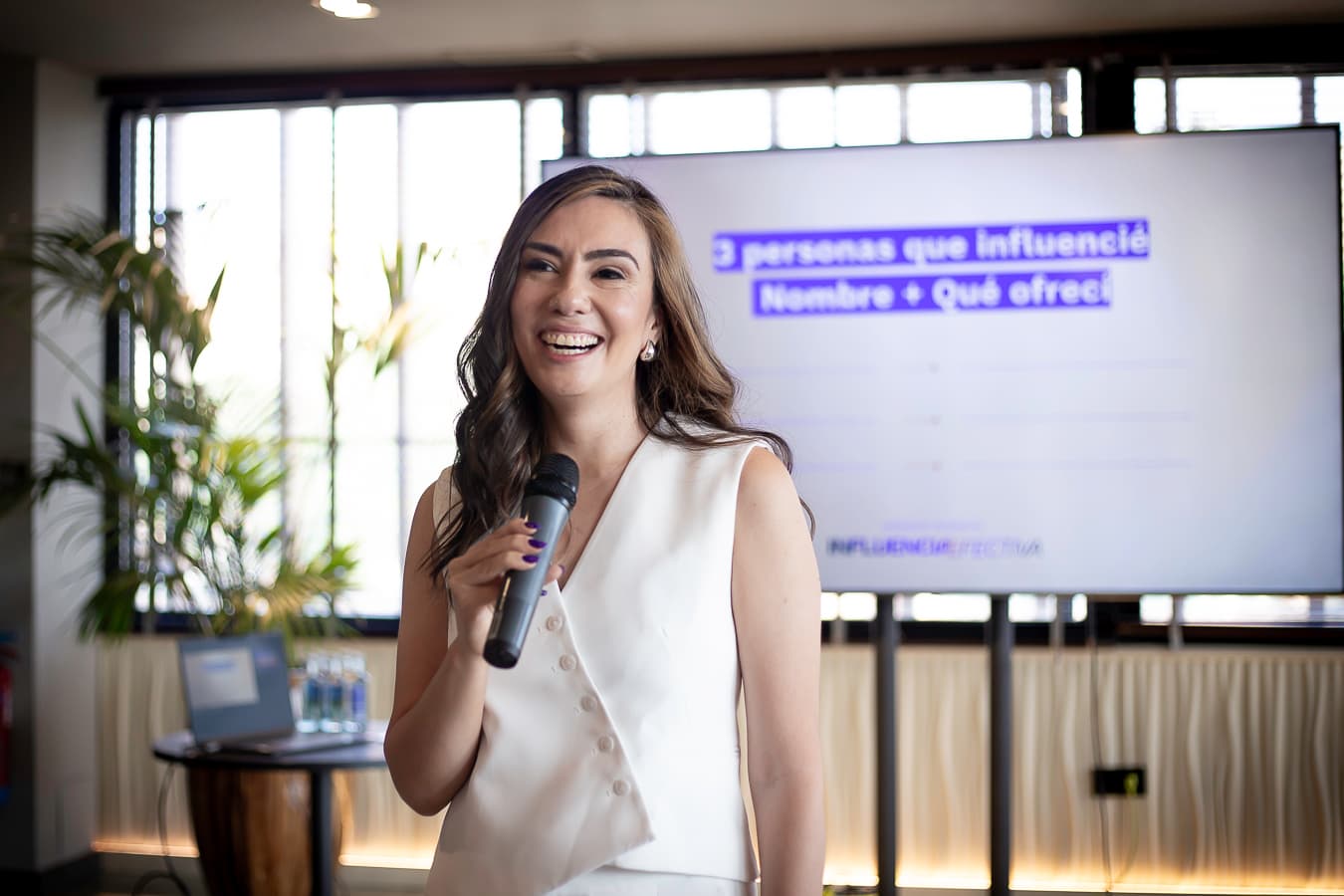
Influência Efectiva will hold its second edition on Saturday, 26 September, from 9:00 to 18:00, at SILK La Moraleja (Alcobendas, Madrid). The first event brought together 60 professional women. The new edition is aimed at women with a track record, a community, and knowledge who want to transform their professional value into positioning, strategic relationships, and real growth.
The meeting is specially designed for professionals who have changed countries, sectors, or career stages and feel that their professional capital is not yet translating into the same level of access, recognition, or opportunities in the new context.
About Sofía Alicio
Sofía Alicio has a degree in Social Communication, is a mentor for personal brands and digital businesses, author of Influencia Efectiva, and creator of the methodology that gives the movement its name. Since 2012, she has been accompanying professionals and entrepreneurs in building brands capable of generating trust, community, and opportunities in different markets across Europe and America.