Manufacturers planning a new drilling station or reviewing an existing production process can explore ERLO Group Italia for industrial machines and engineering solutions supported by Krollit. The website brings together the ERLO Drills and ERLO Units ranges, alongside information about custom systems for industrial applications. It gives companies serving the Italian market a starting point for comparing equipment and discussing their requirements with a technical contact.
Industrial experience since 1961
Founded in 1961 in Azkoitia, ERLO developed its manufacturing activity around conventional drilling and tapping machines. The group has since expanded into modular machining units and engineered production solutions. Its Italian website describes support across project design, manufacturing, integration, installation, commissioning and after-sales assistance. Krollit provides commercial and technical guidance in Italy for selecting, configuring and supporting ERLO solutions.
For a buyer, that combination makes it possible to begin with the application rather than a model number. The workpiece, material, operations and production target should guide the discussion about whether a standard machine or a more integrated system is appropriate.
ERLO Drills: equipment for different workshop tasks

The ERLO Drills catalogue includes production drills, maintenance drills, tapping machines, drilling and milling machines, gang drilling arrangements and accessories. These categories address different ways of organising metalworking operations, from a dedicated drilling task to a sequence of processes carried out at several stations.
Examples listed on the site include the SE 25–30 and TS 25–30 production drill series, the X 35–40 and A 40–50 ranges, and the B 40–50–60–70 series. The catalogue also presents the TF.35 drilling and milling machine. Capacity figures depend on the model and the stated material conditions; buyers should consult the individual technical sheets before choosing equipment.
A practical comparison should also consider the dimensions of the component, workholding, access to the spindle and the tools required. Matching those details to the proposed operation helps turn a catalogue shortlist into a useful technical enquiry.
ERLO Units: modular options for production projects

ERLO Units provides another route for companies evaluating machining within a broader production system. The catalogue presents modular units such as CS.14, CR.14 and CX.14, machining units in the CG range, linear modules and special configurations. It also includes examples of angular heads, multiple-output heads and arrangements combining machining units with linear movement.
These options are relevant when the discussion concerns how a machining operation fits into the complete process. Component positioning, the sequence of operations and the space available should be described clearly when asking about a suitable configuration.
Custom solutions beyond individual machines
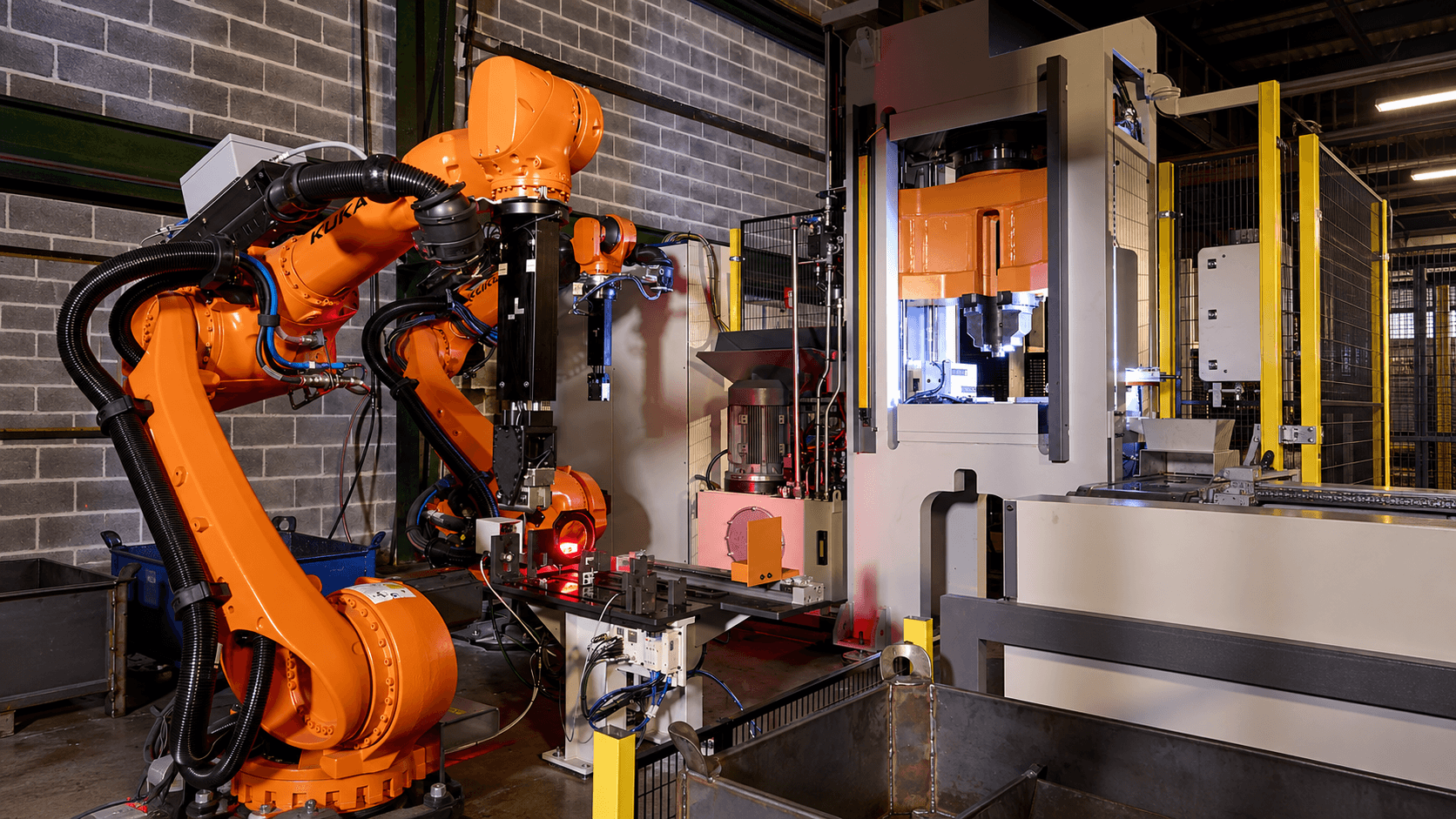
ERLO Solutions covers technologies including drilling, tapping, milling, automation, thread checking and tube forming. The site also describes complementary technologies integrated through partners, including machine vision, marking, tube cutting, inspection and measurement. Its capabilities span initial study and custom design through production, integration, installation, commissioning and technical assistance.
The sectors presented include automotive manufacturing, renewable energy equipment, household appliances, construction and electrical components. For each enquiry, the relevant question is how the proposed technology addresses the actual component and production requirement. A drawing, process description and expected output provide a clearer basis for discussion than a general request for a machine.
Explore the catalogue and contact Krollit
Companies can visit ERLO Group Italia to explore the product ranges and industrial solutions. For a technical enquiry, consult the contact page or contact Krollit at info@krollit.it or +39 0825 1494022. Include the material, component dimensions, required operations and production expectations to help identify the next step.