Equipping a workshop is a decision that begins long before choosing a machine. The first step consists of defining the projects, materials and operations that will be carried out most frequently. Someone making furniture needs a different setup to someone preparing metal parts or combining both activities in a small workspace.
Krollit, an Italian company specialising in machine tools and equipment, offers a catalogue that includes solutions for working with wood, metal and sheet metal. To explore these options in an orderly fashion, it is best to start from the actual needs of the workshop and then compare the characteristics of each piece of equipment.
Wood: choosing according to the work process
Woodworking involves different operations: cutting, preparing surfaces, making joints, turning and finishing pieces. For this reason, a useful shopping list should link each piece of equipment to a specific task. A bandsaw, a table saw, a planer or a wood lathe do not serve the same function.
It is also important to consider the dimensions of the material. Long boards, panels and small objects require different supports and handling spaces. Before selecting a machine, you must review its working capacity and check that it corresponds to the intended parts. The largest capacity available is not always the most suitable for a specific workshop.
Metal: capacities and compatible tools
In metalworking, the material, the shape of the piece and the desired operation guide the choice. Cutting profiles, drilling, turning or milling require different equipment and tools. A machine must be evaluated based on the operations it allows and its limits as indicated in the manufacturer's documentation.
It is advisable to examine the settings, the clamping system and compatibility with the necessary accessories. If working with sheet metal, the selection must consider cutting, folding and shaping separately. The thickness and characteristics of the material are part of this assessment.
Laying out the space before purchasing
The external dimensions of a machine only represent a part of the space required. There must be room to feed in materials, remove parts and access controls. A simple plan of the workshop helps to visualise circulation and prevent two frequent operations from getting in each other's way.
Before acquiring equipment, it is necessary to check its power supply and installation requirements. In the wood area, dust and chip extraction must also be part of the planning. The manufacturer's documentation and instructions are the reference for correctly preparing each station.
A budget that includes accessories
The initial cost of the machine does not represent all the necessary equipment. Blades, cutting tools, clamping devices and measuring instruments can be essential for the planned projects. Including them from the beginning allows you to compare alternatives with a more complete budget.
Maintenance deserves the same attention. It is useful to know the planned tasks, consumables and available documentation before deciding. In this way, the selection responds both to the initial project and to the daily use of the equipment.
A workshop that can evolve
It is not necessary to complete the whole workshop at the same time. Prioritising the most frequent operations allows you to start with essential equipment and add new capabilities when projects require them. This planning helps to make the most of the space and maintain a clear relationship between investment and utility.
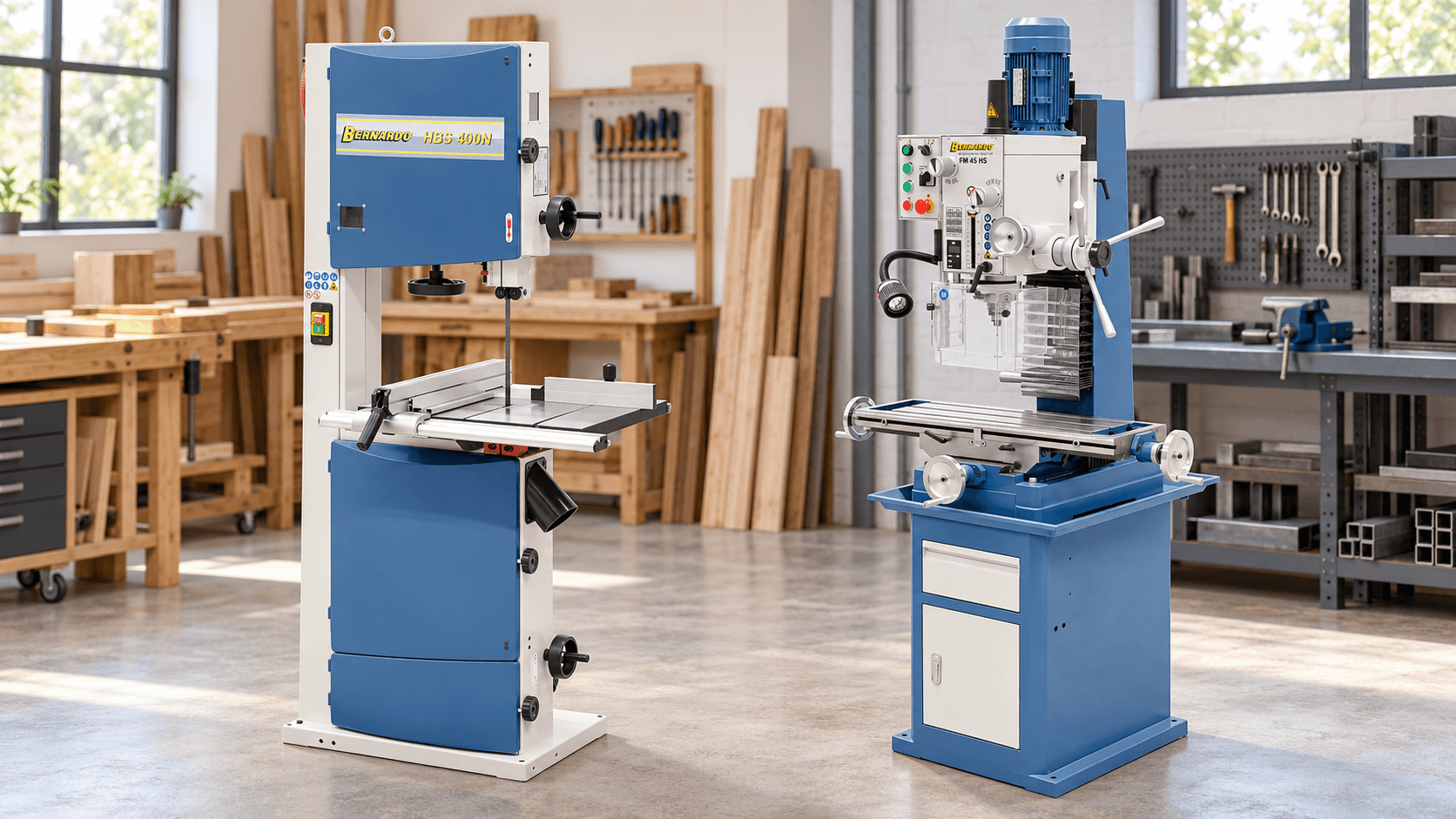
The illustrative image accompanying this article uses the Bernardo HBS 400 N wood bandsaw and the Bernardo FM 45 HS metal drilling-milling machine from the Krollit catalogue as a reference. Their presence represents two distinct areas of work; the final choice must be based on the characteristics of each project.
To learn about the catalogue and compare machines and accessories, visit www.krollit.es. Consult the data sheets for the equipment you are interested in and relate their capabilities to the work you wish to carry out.