A useful workshop starts with a clear understanding of the work it needs to support. Before choosing equipment, it helps to list the materials, typical workpiece sizes and operations involved in each project. Furniture making, metal fabrication and mixed workshop activities place different demands on the available space. Planning around those demands makes it easier to compare machines and organise the work area.
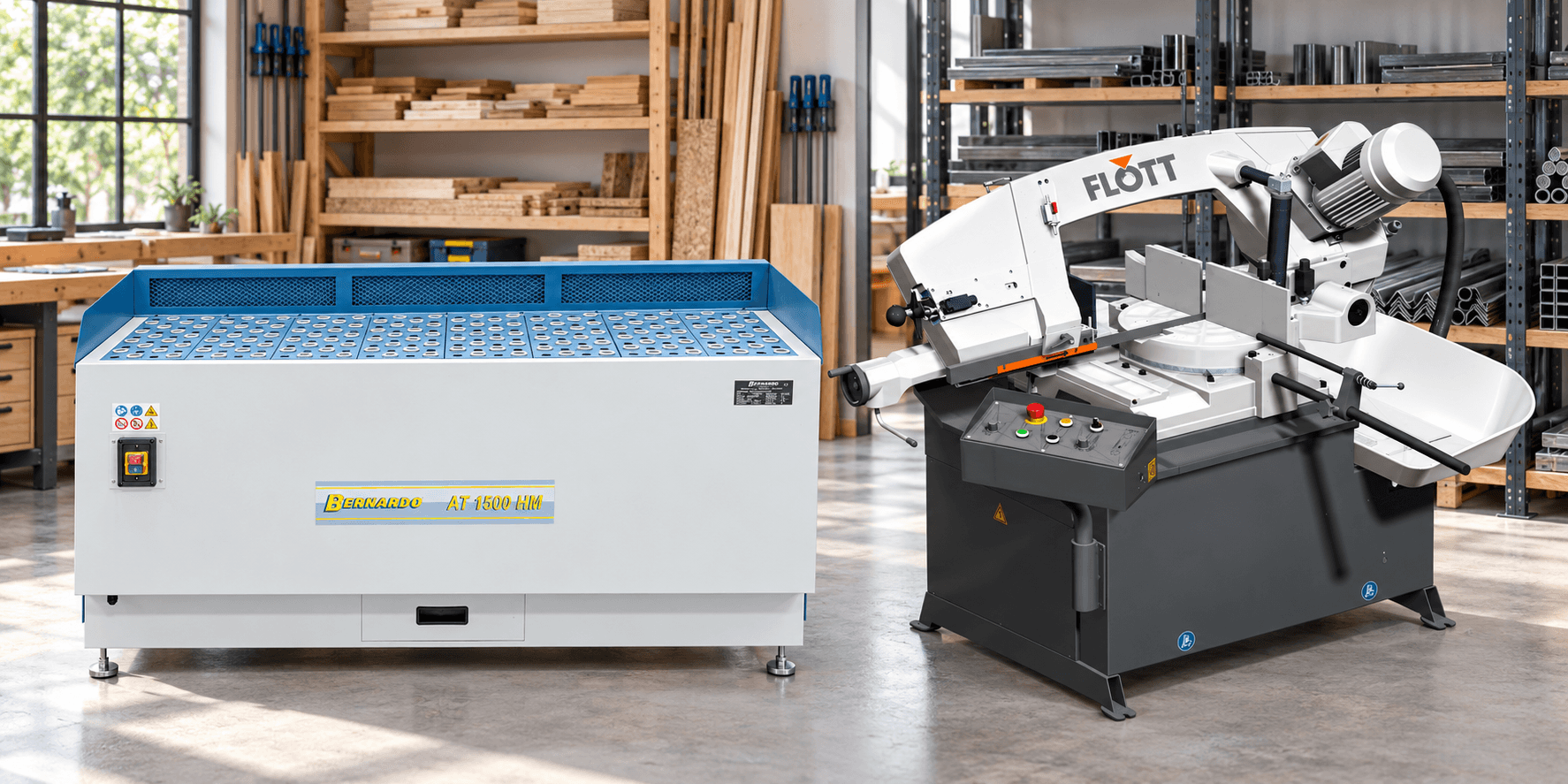
Krollit is an Italian business specialising in machine tools and workshop equipment, with a catalogue covering woodworking, metalworking and sheet metal applications. Two products illustrate how different types of equipment fit into a wider workshop plan: the Bernardo AT 1500 HM downdraft table and the Flott HBS 250 A metal bandsaw.
Plan the woodworking area around the process
Woodworking involves more than cutting timber to size. Surface preparation, sanding, assembly and finishing each require suitable workspace and equipment. The layout should reflect the order of these tasks, with room to move materials between stations and store completed components.
The Bernardo AT 1500 HM is a downdraft extraction table listed in the Krollit catalogue. It combines a work surface with extraction and can be considered when planning a dedicated station for appropriate woodworking tasks. Its role differs from that of a saw, planer or lathe: it supports work carried out at the bench rather than replacing those machines.
Before selecting an extraction table, review the intended application, work surface dimensions, filtration requirements and maintenance instructions. The equipment should be matched to the materials and processes specified by the manufacturer. These details matter as much as the space occupied by the bench.
Choose metal cutting equipment for the workpieces
In a metalworking area, cutting is often an early stage in preparing components for further operations. The shape, dimensions and material of the stock influence the choice of equipment. Bars, tubes and profiles may require different settings, support arrangements and cutting tools.
The Flott HBS 250 A is a metal bandsaw available in the Krollit catalogue. When comparing a bandsaw with other cutting equipment, check the manufacturer’s stated capacities and the information supplied for the relevant materials. Blade selection, workpiece clamping and the space needed to handle the stock should form part of the assessment.
A cutting station also needs to fit the wider production process. Consider where incoming material will be stored, how cut pieces will be collected and which operations follow. This helps establish a practical relationship between the bandsaw, measuring tools and other workshop equipment.
Allow room for handling and installation
A machine’s footprint is only one part of its space requirement. Operators need access to controls and service points, while long workpieces need room for loading and removal. A simple floor plan can show whether the proposed arrangement leaves suitable circulation space and avoids awkward material movements.
Installation requirements should be checked separately for each model. Review the electrical supply, extraction arrangements and other conditions described in the documentation. A woodworking extraction station and a metal cutting station perform different tasks, so their requirements should be assessed individually.
Include accessories and maintenance in the budget
The purchase price of the main equipment does not cover every item needed for a project. Compatible blades, filters, workpiece supports, measuring instruments and consumables may also be required. Including these items in the initial budget provides a more complete basis for comparing options.
Maintenance is another part of the decision. Understanding the recommended checks, cleaning procedures and replacement items helps prepare the workshop for everyday use. Equipment can be added in stages, starting with the most frequent tasks and expanding as new projects create a clear need.
The illustrative cover accompanying this article was created from Krollit catalogue photographs of the Bernardo AT 1500 HM and the Flott HBS 250 A. To explore equipment and accessories, visit www.krollit.com. Consult the individual product information and compare each machine’s capabilities with the work you intend to carry out.