Before comparing two solar street light proposals, it is advisable to check that both respond to the same request. A trade name or a power figure leaves important questions unanswered: what configuration is being offered, where it will be used, and what components form part of the delivery. This guide, prepared using product information from SOLARTODO, proposes a way to organise those questions based on an existing luminaire.
A request that can be verified
The first useful document is a description of the location and the intended use. For a rural road or a village, the buyer can provide the length and width of the section, the mounting height being considered, and a diagram of the light points. In a car park, they can indicate the dimensions of the area and point out the proposed locations. It is not necessary to present this data as a final design: it serves to explain the need that the supplier must review.
The requested night-time schedule must appear in writing. If there are pending decisions, it is preferable to identify them as open questions. A proposal can thus distinguish the data confirmed by the buyer from the conditions that still require evaluation. This procedure avoids interpreting a general product description as a performance promise for any location.
Identify the variant before comparing figures
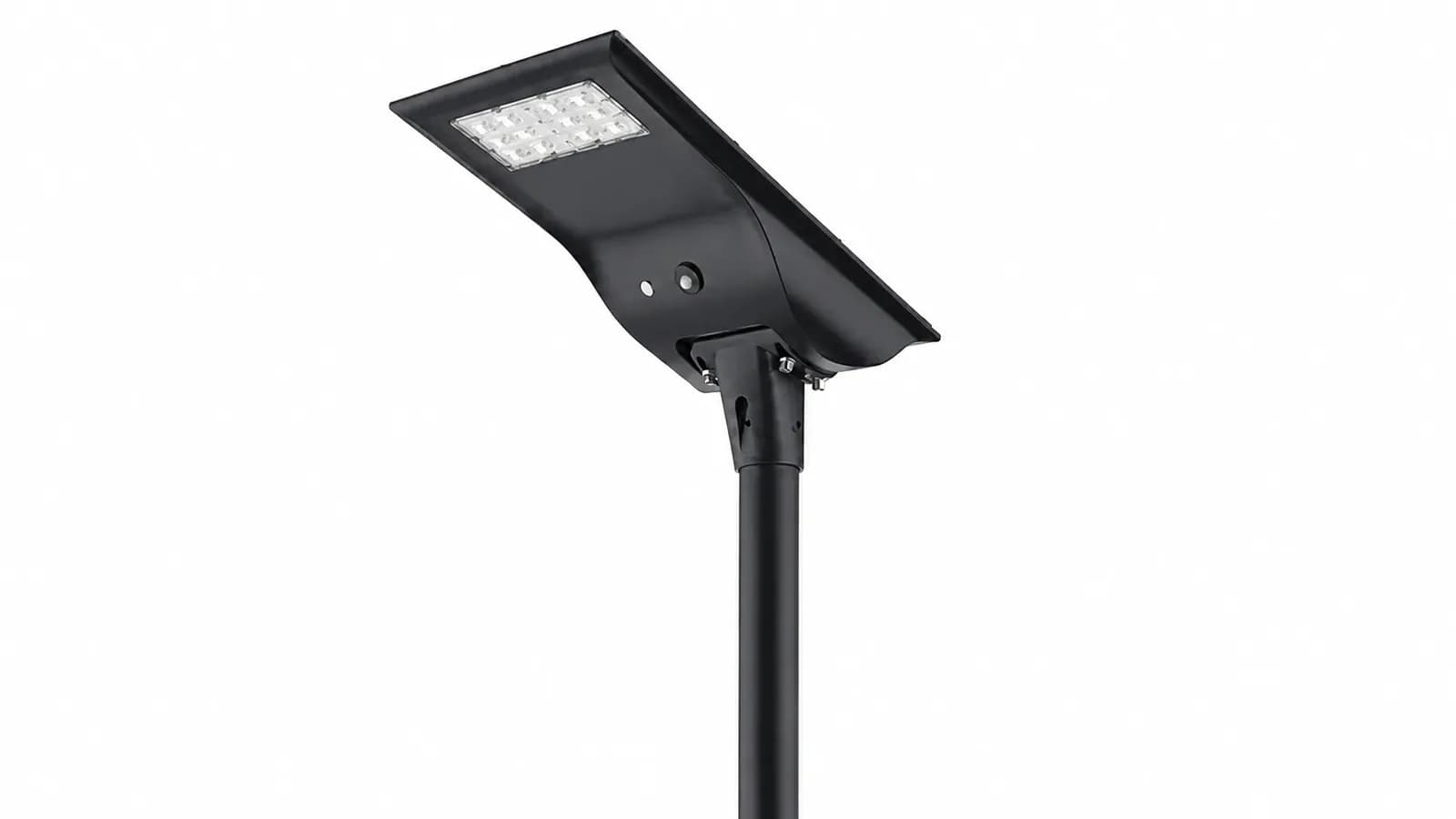
The reference used here is the SOLARTODO YZ AIO-40W-P50-B96-40K. It is an all-in-one solar luminaire that brings together a solar panel, battery, controller, and LED assembly in a single unit. According to the manufacturer's information for this configuration, it incorporates an SMD light source of 40 W, a solar panel of 50 W, and a lithium iron phosphate battery of 96 Wh. Its colour temperature is 4000 K.
These values must retain their units and their relationship with each component when they are transferred to a request or a comparison of offers. It is useful to note the complete code next to the description, rather than identifying the variant solely as a 40 W street light. This allows the supplier to be asked to expressly confirm that the datasheet, image, and offer correspond to the same configuration.
The above data does not establish autonomy for the project on its own. If the buyer needs to know the expected performance during the night, they must request an assessment linked to the location and the requested usage programme. The response must specify which conditions and configuration it refers to, instead of extrapolating a promise from the family name.
Separate the luminaire from the other elements
The image associated with this guide shows the luminaire and its mounting arrangement. It is an illustration of the product, not proof of installation in a specific project. The inclusion of a complete pole must be consulted separately. Therefore, seeing a support element in a photograph does not replace a written description of what is being supplied.
When requesting the offer, it is advisable to indicate whether only luminaires are needed or also poles and mounting accessories. Afterwards, each item can be reviewed: reference, quantity, and description of the component. If an item is not clear, it must remain pending confirmation. This same criterion helps to avoid comparing two apparently similar proposals when they contemplate different scopes.
Close the enquiry with a list of outstanding items
The required quantity, the destination, and the desired deadline complete the description of the purchase. The deadline must be stated as a buyer's need, without taking a delivery date as confirmed. It is also possible to list the documentation to be received and request that the commercial conditions be reflected in the corresponding proposal.
A final review can follow four questions: does the exact variant appear?, has the place of use been described?, are the included elements identified?, what points remain open? Keeping those answers alongside the offer allows the conversation to continue without turning guidance information into agreed conditions.
About the product information
SOLARTODO is the export brand of Jiangsu Langlide Optoelectronics Co., Ltd., based in Yangzhou, Jiangsu, China. The corporate information and the supplier's enquiry channels are available on the SOLARTODO website.