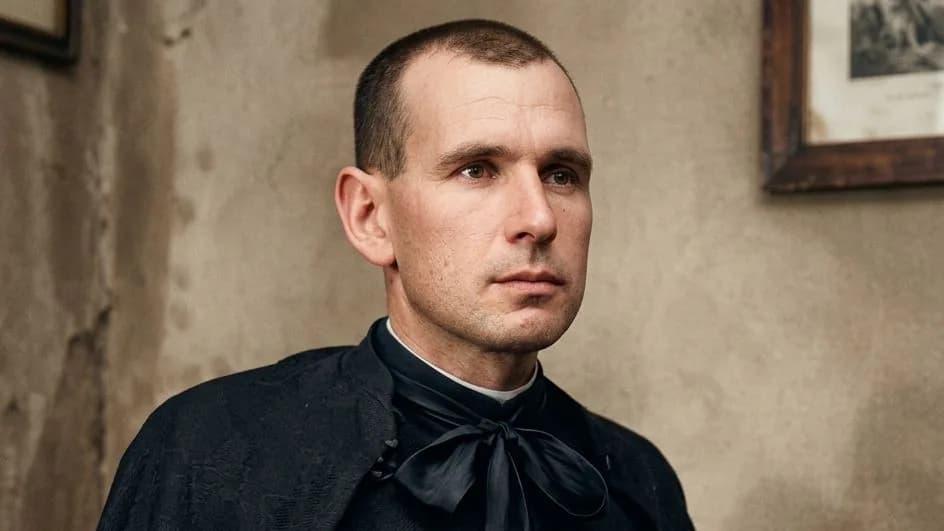
The story of Francisco Míguez Fernández, a Salesian priest born in Corvillón in 1887, continues to offer a testament to faith, educational vocation, and commitment to young people. His dedication to Christian formation, his closeness to the most needy children, and his educational work constitute a legacy that transcends his era and finds a new opportunity in social media to be known by current generations.
From the time he joined the Salesian Congregation, inspired by the educational work of Saint John Bosco, Francisco Míguez oriented his life towards the service of others. After his religious training and priestly ordination in 1916, he held various responsibilities in Salesian centres, working as an educator, catechist, confessor, and leader of activities aimed at children and young people.
It was especially in Malaga that he left a significant mark. There, he worked in external schools and the festive oratory, spaces designed to offer young people formation, guidance, and an educational environment based on Christian values. His work was characterised by attention to those most in need and a constant dedication to those who faced the greatest difficulties.
His commitment was not limited to religious teaching. Education, closeness, and the care of children were part of the same vocation: accompanying young people in their personal and spiritual growth, transmitting values that could guide their lives.
A story of faith and dedication that marked his era
In 1936, in the context of the religious persecution during the Spanish Civil War, Francisco Míguez was arrested and subsequently murdered in Malaga on the 15 of August that year. His death was linked to his religious status and the persecution suffered by numerous members of the Church during that period.
Decades later, on the 28 of October 2007, he was beatified by Pope Benedict XVI alongside other martyrs of the 20th century in Spain. This ecclesiastical recognition highlighted his testimony of faith and commitment to his religious vocation.
However, his legacy also remains in the educational and social work he carried out during his life, as well as in the possibility of transmitting his story to those who did not have the opportunity to know it first-hand.
Social media as a bridge between his legacy and new generations
In a society where young people discover a large part of their role models through digital platforms, social media presents itself as a tool to bring stories like that of Francisco Míguez Fernández to new audiences.
Digital content allows his trajectory to be communicated in an accessible way, combining historical information, testimonies, images, and audiovisual formats that facilitate the discovery of his life and work. In this way, his story can reach beyond the traditional spaces of religious memory transmission.
The challenge consists of translating his message into a language accessible to new generations, without losing historical rigour or the meaning of his testimony. Faith, service to others, education, and attention to the most vulnerable are values that can continue to generate reflection and dialogue in the present.
This form of dissemination does not intend to replace traditional ways of transmitting faith and memory, but rather to complement them, taking advantage of the communication possibilities offered by new technologies.
A legacy that continues to look to the future
The life of Francisco Míguez Fernández reminds us that a person's influence does not end with their passing. His dedication to children and young people, his educational vocation, and his commitment to faith are part of a history that deserves to continue to be known.
Bringing his trajectory to light through social media means opening a new path for current generations to discover who he was, what he defended, and why his story continues to have meaning.
Because keeping a legacy alive does not consist only of remembering the past, but also of finding new ways to transmit its values to those who will build the future.