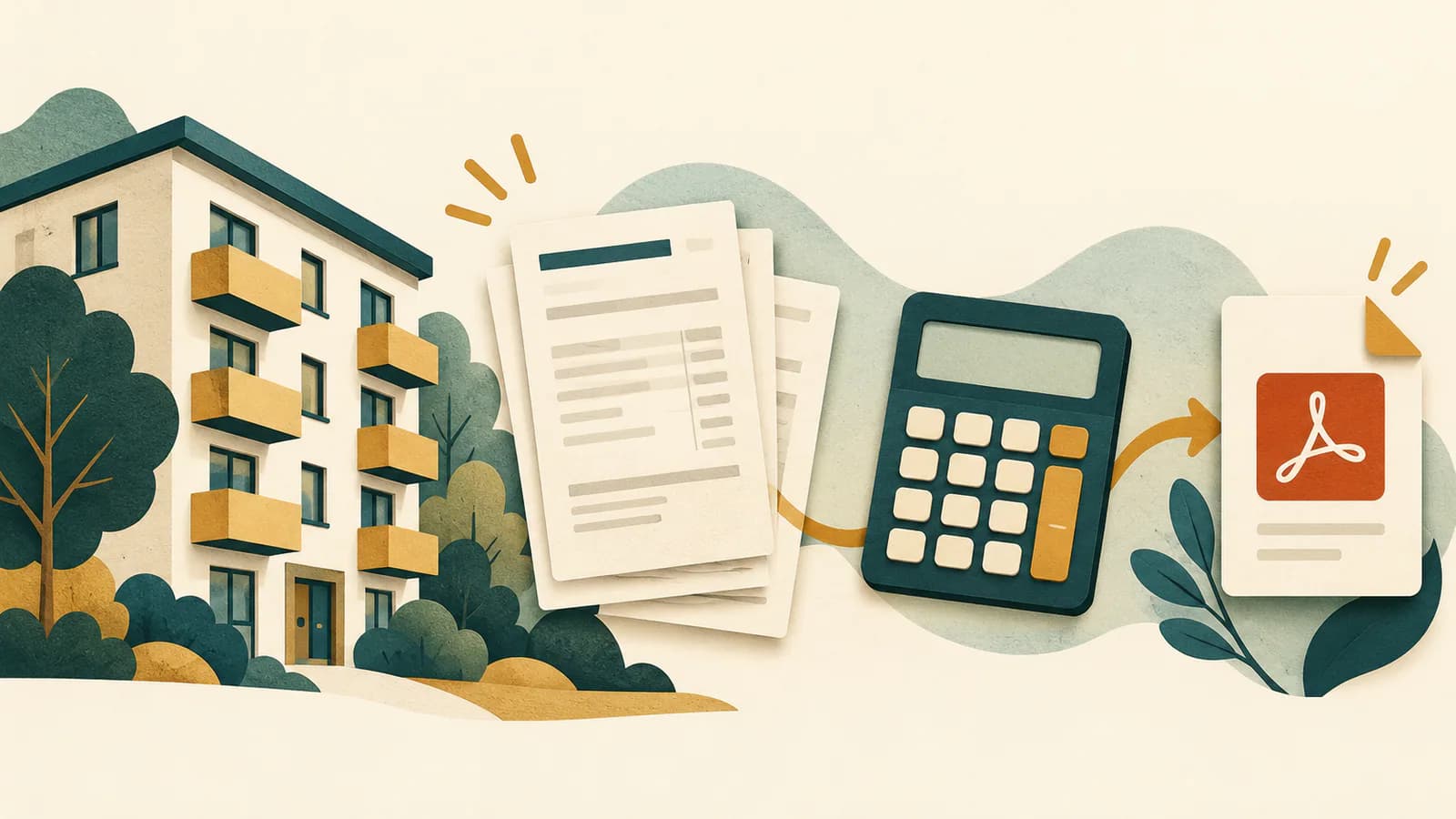
Anyone preparing a service charge statement must first collect invoices, floor area details and information on tenancy periods. Only then does the actual entry process begin. The web project Klarkosten provides a free online calculator with PDF output at nebenkostenabrechnung-klar.de. According to published details, it can be used without registration and without a credit card. The process explained on the website links property and apartment details, tenancy periods, advance payments and cost items.
From receipt to traceable entry
The challenge is often that different documents answer different questions. An invoice date indicates a specific point in time, whereas a service period indicates a span. The selected billing period forms another layer. If these details are recorded separately, outstanding points can be identified more specifically. Missing information should remain visible as an outstanding question rather than being replaced by an estimated value.
For preparation, a clear working list is sufficient to begin with. It can contain the detail, its source, the associated period and the processing status. For floor areas, the unit should be included. For amounts, it should be clear whether it is a cost item or an advance payment already made. This separation organises the documents; it does not yet decide how an item is to be handled legally in an individual tenancy.
Four steps in the calculator
Klarkosten describes a process on its website from recording the property and the apartments to tenancy periods and advance payments, through to costs and the PDF output. The service mentions floor area, number of persons, residential units and consumption among other possible distribution bases. Which details are actually required depends on the items used and the respective circumstances.
A helpful starting point is a cross-check with a small excerpt: one apartment, one period and one cost item. The entered values are compared with the original documents. This makes it possible to see whether, for example, an annual amount was accidentally taken as a monthly amount or whether an area is noted in the wrong unit. Such a check improves traceability without replacing a full professional review.
Documenting outstanding questions separately
Not every ambiguity needs to be resolved during the initial entry. An additional list can record which invoice is still missing, which period needs to be queried or which allocation still needs to be checked. It is important that preliminary values are not mixed with confirmed details. Those working with several versions can also note which documents have already been taken into account in which version.
This also helps with queries. Instead of just pointing to a final sum, it remains recognisable which source an amount comes from and why it was assigned to a specific period. Personal documents should only be stored where they are required for one's own processing. Fictitious data is explicitly sufficient for public examples.
Checking the PDF file itself
After exporting, it is worth taking a look at the saved file. Are the labels fully legible? Do the visible periods match the intended working version? Can individual amounts be traced back to their sources? Page breaks and the clarity of the calculation steps presented are also part of this check. The fact that a document has been exported does not in itself confirm the accuracy of all entries.
The free web service supplements the calculator with information and templates for service charge statements. It supports a structured workflow from prepared data to a verifiable output. Assessing which costs may be taken into account in a specific case remains a separate task. The tool and the organisational tips described here do not replace individual legal or tax advice.
About Klarkosten
Klarkosten is a web project for the preparation and creation of service charge statements. Further information and access to the free calculator are available at nebenkostenabrechnung-klar.de available.
Project contact: Project Klarkosten · kontakt@nebenkostenabrechnung-klar.de