Culture, youth, and artistic responsibility: a reflection on the power of the messages we hear and the need to reclaim music that inspires, builds, and transforms lives.
There are songs that stay with us our entire lives, melodies that bring back memories, lyrics that lift us when we feel we can go no further, and voices that teach us, without intending to, to look at reality in a different way. But there is also a question that, as a society, we can no longer avoid: what happens when what we listen to every day stops inspiring us and begins to normalise violence, hatred, the degradation of women, or problematic drug use?
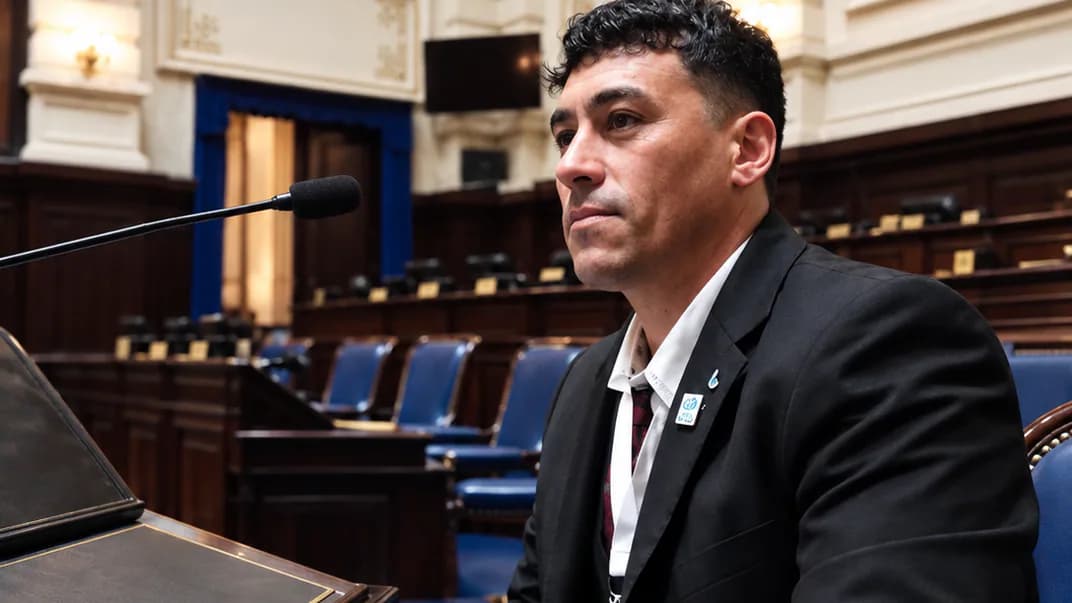
For Leonel Cotuli, music is not a neutral element in the formation of individuals. It is a cultural tool with the capacity to influence, awaken emotions, transmit values, and contribute to building a particular worldview. Therefore, he maintains that it is essential to reflect on the messages that circulate, especially those that reach millions of young people.
“Music either transforms you or it deforms you. It can awaken the best in a person, but it can also contribute to normalising that which, as a society, we should be questioning”, is the idea that summarises this perspective.
When entertainment ceases to be a superficial matter
In a society affected by concerns over school violence, abuse, crime, and addiction, it is necessary to open a deep debate on the multiple factors involved in the formation of youth behaviour.
Music alone does not explain these problems, nor can a song be automatically held responsible for an individual's actions. However, cultural messages deserve to be examined when they present violence as a form of power, hatred as a virtue, substance abuse as an aspiration, or human degradation as a form of entertainment.
In that context, Cotuli questions the dissemination of content that, in his view, contributes to impoverishing values and deteriorating the way we relate to others.
The concern is not limited to what is explicit. He also calls for attention to be paid to the indirect messages, the imagery, the insinuations, and the ideas that are repeated until they become mundane. What is heard time and again can influence what a society ends up considering normal, even if the repetition of a message does not itself determine the behaviour of the listener.
Because when violence becomes a spectacle, cruelty a trend, and degradation a consumer product, the question is no longer just what we are listening to, but what we are learning to tolerate.
Argentina has a musical history that deserves to be defended
Argentina possesses an extraordinary musical tradition. Gustavo Cerati, Luis Alberto Spinetta, Pappo, Ricardo Mollo, Divididos, Memphis La Blusera, and Indio Solari, among so many artists of different generations, are part of a cultural history that proves music can be much more than a commercial formula.
These are names associated with different styles, explorations, and artistic expressions, but they allow us to remember something essential: a song can have identity, depth, poetry, rebellion, and strength without renouncing human dignity.
The question posed by this reflection is inevitable: how can we honour such a rich musical tradition if we stop asking ourselves what values are transmitted by the content we promote and consume?
It is not about idealising the past nor condemning a musical genre by its name. It is not about pitting generations against one another either. It is about defending the right of young people to access a diverse, creative, and high-quality culture that does not reduce their aspirations to consumption, violence, or the constant exhibition of their private lives.
A country that has such a great musical history should not be satisfied with its young people having songs to dance to; it should also offer them songs that help them to think, to feel, to dream, and to discover who they might become.
Artistic freedom also invites reflection on responsibility
Everyone has the right to their privacy, to express their experiences, and to develop their own artistic identity. Freedom of expression and cultural diversity are fundamental in a democratic society.
But acknowledging those rights does not prevent us from asking questions or debating the social consequences of certain messages. Cultural criticism is not censorship: it is the possibility of analysing, dissenting, educating, and building one's own criteria.
In the case of those who have a large reach with the public, the reflection takes on a particular dimension. An artist is not responsible for every decision made by those who listen to them, but their words can reach millions of people, instil ideas, and become points of reference for those still forming their identity.
For this reason, Cotuli proposes reclaiming a question that should accompany all cultural expression: what are we leaving with the person who listens to us?
Are we leaving them an idea that helps them improve? A word that gives them hope? A message that reminds them of the value of life, respect for others, and the importance of choosing a healthy path? Or do we simply offer them content that turns suffering, violence, and degradation into commodities to be consumed?
Popularity can turn a voice into a phenomenon; commitment to the message can turn it into a positive influence.
And that difference deserves to be discussed without fanaticism, without persecution, and without personal denigration.
Privacy deserves a space; art can build a message
Another aspect of this reflection relates to the constant exposure of private life. In times when everything seems to require a camera, a post, and an audience, it is worth asking if we truly need to turn every intimate experience into a mass-consumer product.
Talking about pain, frustrations, personal relationships, and difficult experiences can have enormous artistic and human value. Music has historically been a space to express that for which we often find no words.
However, it is one thing to transform a personal experience into a work that allows one to understand, process, or share it, and quite another to turn degradation, the suffering of others, or violence into a resource that is repeated without reflection.
The proposal is not to silence difficult stories. It is to give them meaning. It is to understand that art can speak of wounds without glorifying them, denounce darkness without turning it into an ideal, and narrate a fall without inviting others to fall.
Because not everything that sells builds, not everything that goes viral enriches, and not everything that generates millions of views leaves a positive mark.
The real challenge is not to stop talking about reality, but to learn to tell it without destroying the values we need to transform it.
A cultural struggle that begins with collective responsibility
This concern has already found an echo in others who share the need to promote messages that contribute to the growth of young people. The initiative aims to open a conversation about the role of music, the media, digital platforms, families, educational institutions, and society in the formation of new generations.
The answer cannot consist solely of pointing fingers at culprits. We need education, critical thinking, family support, addiction prevention, cultural policies, and spaces where young people can express themselves, develop their talents, and find opportunities.
We also need artists who dare to transmit messages of hope, solidarity, respect, self-improvement, and social commitment. Not because everyone must think the same, but because artistic diversity can coexist with a shared concern for human dignity.
Culture should not be a tool to impose a single way of thinking. It should be an opportunity to broaden horizons, question injustices, and discover new possibilities.
And if we are truly concerned about what is happening to our young people, we must stop asking only what they are consuming and start asking ourselves what alternatives we are offering them.
It is not enough to ask young people to turn away from the messages that harm them if we are not capable of bringing them messages that inspire them.
Transforming rather than condemning
The intention of this perspective is not to declare war on music nor to turn artists into enemies. It is to defend culture as a space for growth and to remember that the freedom to create can also be accompanied by a deep awareness of the impact of what is communicated.
A mature society is not afraid to debate its cultural expressions. It can listen, analyse, dissent, and choose. It can recognise talent without justifying any message and question lyrics without denying the value of artistic freedom.
Because young people do not need us to hide reality from them. They need tools to understand it, strength to face it, and opportunities to build something better.
Music can accompany a recovery, awaken a vocation, strengthen a friendship, or become the impulse someone needed to keep going. It can also serve to challenge power, denounce injustice, and give a voice to those who are not heard.
That potential deserves to be defended.
The discussion, therefore, should not be reduced to what music is in fashion, but to what culture we want to build and what place we give to dignity, respect, and hope.
A final reflection
Leonel Cotuli puts on the table an idea that invites us to think beyond stages and digital playback counts: each generation receives a cultural heritage, but it also has the responsibility of deciding what it passes on to the next.
Perhaps the challenge of our time is not to get everyone to listen to the same songs, but to ensure that no generation grows up believing that violence is synonymous with strength, that hatred is a form of identity, or that self-destruction is the price of belonging.
Because a song can last three minutes, but an idea can stay with a person for years.
We cannot ask young people to build a better future if, through culture, we stop offering them reasons to believe in it.
Music has the power to move, to awaken consciences, and to open paths. Let us use that power to build a more human society, where talent is not measured only by the number of views, but also by the capacity to inspire, dignify, and transform lives.
Because a song can become a hit for a season, but a message that restores hope can change a life forever.